WRITE WITH BOB
WRITING GROUPS
FOR CREATIVE ARTISTS
OF ALL TYPES
Bob offers creative writing workshops using the Amherst Writers & Artists Method. The AWA is a nonprofit arts organization and network of writing workshop leaders. Most workshops are generative (you write during the group). The Method can also be used for manuscript review (what’s more often called a “critique group”).
The objective of an AWA workshop is to instill respect and openness to others’ voices and our own. The objective is to allow individuals to develop confidence in their craft at their own pace and in their own direction. The objective is to model understanding that each voice is individual, unique and contains creative genius. The objective is to establish a way of listening that leaves the listener’s assumptions and expectations aside.
In all these objectives is the proven truth that each writer emerges from the workshop with the knowledge that they have been deeply heard. In this experience the ability to feel whole both as a human being and as an artist is accomplished.
I am not your guru.
I am not your therapist. I am a fellow writer, holding space.
We focus on the writing.
We are a writing group. We talk about the writing, not the writer. And we treat it as art and storytelling.
You take your own risks.
We all take our own risks, on our own terms, at our own pace.
We listen deeply.
And we respond with what’s strong, what’s working, what stays with you.
We take craft seriously.
We practice craft by noticing the choices a writer has made to create their work.
Your writing stays here.
We don’t talk about it again without your permission.
Most Workshops Don’t Work
Most writing workshops are built on a “shredding” model. Writers are encouraged to be the authority on someone else’s art, so generously offering up everything that needs to be “fixed.” It tends to foster toxic, ego-centric, nerve-racking, unhelpful, pretentious bullshit. The writer convinces themself they “need to go through this” if they want to be “better,” otherwise they’re “being defensive” and “not a real writer.” It constantly treads along lines of superior and inferior. That’s never worked for me.
So we don’t do that here.
This Workshop Is Different
This workshop is harder, because we expect more from each other. Here, writers are protected, respected and accepted just for witnessing their own voices. Through that practice — of giving ourselves permission to write what we need to say — something magical tends to happen: We extend that grace to others. When we listen, we will hear something interesting, because we each contain creative genius. Then we tell each other, honestly, about the great things we heard.
That’s what we do here.
Sample Workshop Night
- Welcome. Get comfortable. Read a poem, maybe.
- Review the AWA Method. Always good to review.
- Prompt. I’ll offer one as a threshold to cross. There’s no wrong way through: question it, ignore it, etc.
- Write whatever you need to write. For 5 or 20 or 30 minutes. Follow your writing where it goes and see what you say.
- Read your work to a captive audience. Reading aloud can help you hear your own voice. (It’s always optional.)
- Listen for what’s strong, what’s working, what stays with you in the work of others. And tell them.
- Repeat as time permits. And soak it all in.
Manuscript Review
Manuscript Review may be offered in some sessions. We still read for what’s strong, what’s working, what stays with you.
We also ask, “Where did I stumble? What’s confusing to me?”
By removing “corrections” and assumptions, the writer remains the sole authority of their piece. Meanwhile, the writer listens, takes notes, and receives the group’s responses as an offering of observation, not a demand for change. Our confusions might be exactly what the writer is hoping for.
What About Bob?
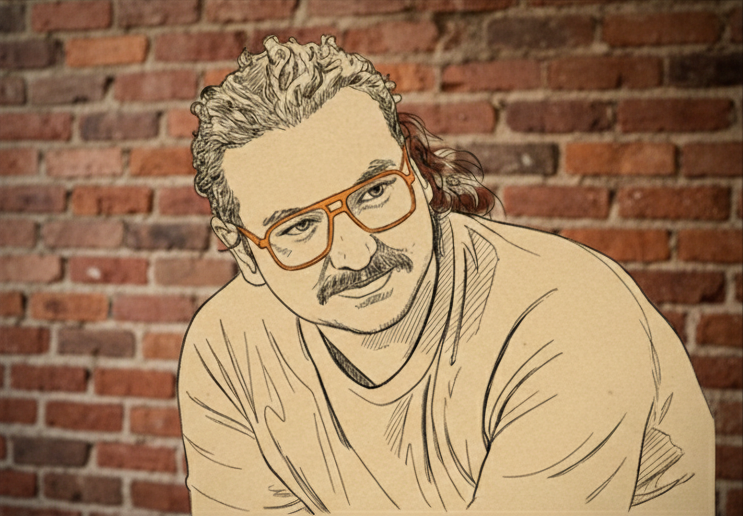
I have been certified to facilitate AWA workshops since 2017. That’s the credential that matters, and there are lots of other AWA Affiliates to choose from. Not every group or facilitator or method is the right fit for every writer or situation, and there are lots of non-AWA writing groups to choose from, too. You do you.
If you care about other credentials, I have trained dozens of AWA Affiliates, I have an MFA in fiction and an MA in English, I have worked for national publications and brands, I have taught college-level English courses, and I have stories, poems and nonfiction published in various magazines and journals.
It’s probably important to note, too, that a lot of my favorite writers had no credentials at all.